
← Back to Blog
Label Requirements & Compliance

Candle Warning Label Requirements and Free Candle Label Template

Benjamin HayesNovember 5, 2026760 views

Candle label requirements in the US are governed primarily by ASTM F2058, the voluntary standard published by ASTM International that specifies the exact warning text, minimum label dimensions, and placement rules every candle manufacturer or seller should follow. Label Toolkit lets you design a fully compliant candle warning label in your browser for free, with no software to install, and export a print-ready PDF or ZPL file in minutes.

  • ASTM F2058 mandates four specific warning statements, a flame icon, and a minimum label size tied to container diameter.
  • Labels must be permanently affixed to the candle or its packaging and remain legible throughout the product's life.
  • Minimum type size is 6 pt (roughly 2.1 mm cap height) for body warning text; the word "WARNING" must appear in bold at 9 pt or larger.
  • Label Toolkit's free candle label template pre-loads the required warning block so you only need to add your brand details and print.

What Is ASTM F2058 and Why Does It Apply to Candles?

ASTM F2058 is the Standard Specification for Candle Fire Safety Labeling. It was first published by ASTM International and has been adopted as the baseline expectation by the National Candle Association (NCA) and major US retailers. While it is technically a voluntary consensus standard rather than a federal regulation, retailers like Target and Amazon routinely require supplier compliance documentation, and the Consumer Product Safety Commission (CPSC) can act under the Federal Hazardous Substances Act if a candle causes injury and lacked adequate warnings.

In short: if you sell candles commercially in the US, treating ASTM F2058 as mandatory is the only safe business posture.

The Four Required Warning Statements

ASTM F2058 specifies four warning statements that must appear verbatim (or in substantially equivalent language approved by the NCA). They are typically presented as a bulleted or icon-led list under the heading "WARNING":

  1. Burn within sight. Never leave a burning candle unattended.
  2. Keep away from things that catch fire.
  3. Keep away from children and pets.
  4. Trim wick to 1/4 inch (6 mm) before lighting. Keep wax pool free of debris.

Some candle makers condense these into a single paragraph, but all four core messages must be present. Omitting even one statement creates a compliance gap that could expose you to retailer rejection or CPSC scrutiny.
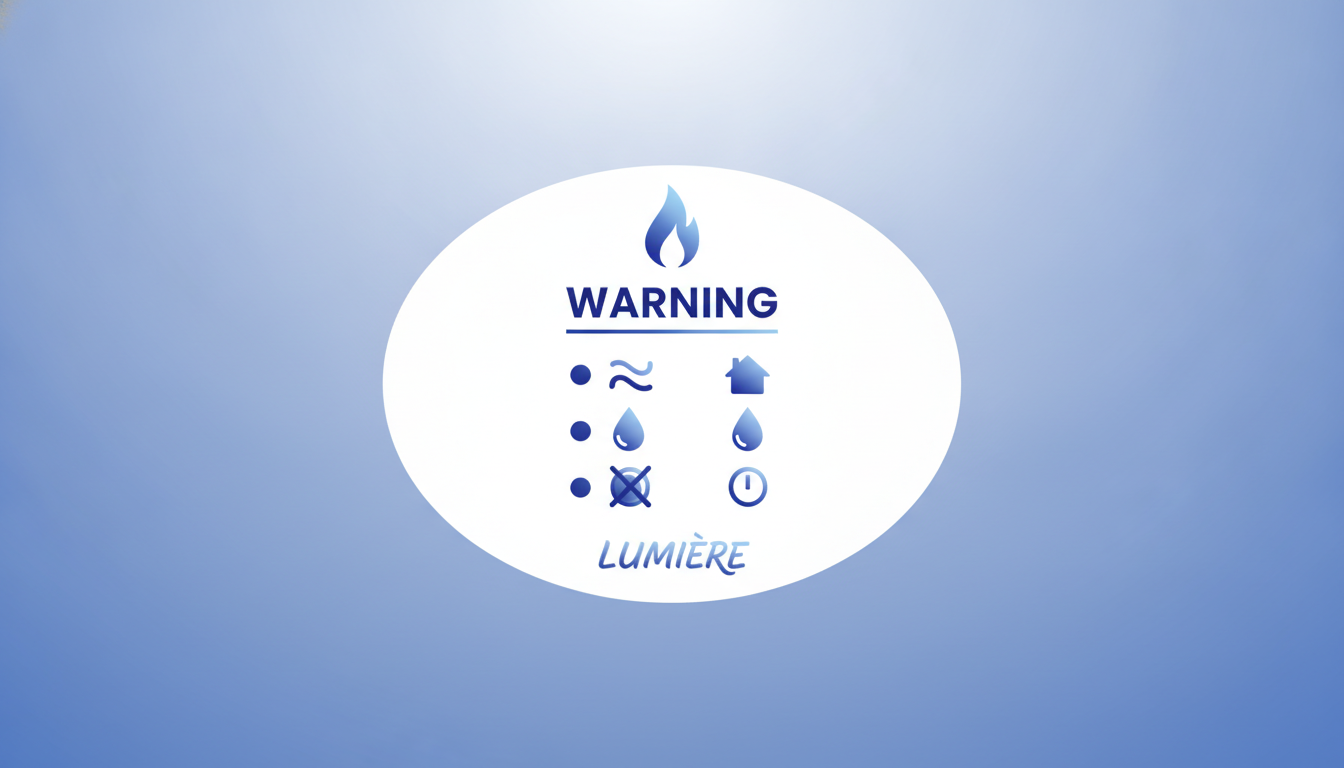
A candle warning label layout showing the flame icon, WARNING heading, four bullet statements, and brand name on a white oval label

Required Label Elements: Full Checklist

ElementRequirementNotes
Signal word"WARNING" in boldMinimum 9 pt type; must contrast with background
Flame / burn pictogramNCA flame icon or equivalentRecommended by ASTM F2058; some retailers require it
Warning statement 1Never leave burning candle unattended6 pt minimum body text
Warning statement 2Keep away from things that catch fire6 pt minimum body text
Warning statement 3Keep away from children and pets6 pt minimum body text
Warning statement 4Trim wick to 1/4 inch; keep wax pool free of debris6 pt minimum body text
Label permanenceMust remain legible through normal product lifeTest adhesion at room temperature and after heat exposure
PlacementBottom or side of candle container, or outer packagingMust be visible before first use

Minimum Label Size for Candles

ASTM F2058 ties minimum label area to container diameter. The table below summarizes the thresholds most commonly cited in NCA guidance:

Container diameterMinimum label widthPractical label size (W x H)
Under 2 inches (50 mm)Label must wrap or stack to fit all four statements legiblyApproximately 1.5 in x 2 in (38 x 51 mm)
2 to 3 inches (50 to 76 mm)Minimum 1.5 inches (38 mm) wideApproximately 2 in x 1.5 in (51 x 38 mm)
Over 3 inches (76 mm)Full warning block at 6 pt or largerApproximately 3 in x 1.75 in (76 x 44 mm) typical

For small votive or tealight candles where the container bottom is the only flat surface, a circular or square label sized to cover roughly 60 percent of the bottom area is acceptable, provided the text remains readable at 6 pt. If the container is too small for the full warning block, the complete text must appear on the outer packaging or a hang tag.

Font, Color, and Contrast Rules

ASTM F2058 does not prescribe a specific typeface, but it does require that text contrast sufficiently with the background to be legible. In practice:

  • Black text on white or light background is the safest choice and meets any retailer's contract requirements.
  • Avoid printing warning text in light gray, yellow, or any color with a contrast ratio below 4.5:1 (the WCAG AA threshold is a useful reference even for physical labels).
  • Do not use decorative or script fonts for the warning block; a clean sans-serif such as Arial, Helvetica, or Open Sans at 6 pt or larger is readable at normal arm's length.
  • The word "WARNING" should be set in bold, all caps, at 9 pt minimum. On a thermal label printer at 203 DPI, 9 pt text is approximately 25 dots tall, which is comfortably legible. At 300 DPI, the same text spans about 37 dots.

EU Candle Labeling: CLP Regulation Differences

If you sell candles in the European Union or United Kingdom, the warning framework shifts to the CLP Regulation (EC No 1272/2008 for the EU; UK CLP post-Brexit). Candles that contain fragrance compounds classified as skin sensitizers or hazardous to the environment must carry GHS/CLP hazard pictograms and H-statements (hazard statements) derived from each fragrance ingredient's safety data sheet. This is a separate and additional requirement on top of ASTM F2058 for any product crossing markets.

For a broader look at GHS pictogram and hazard statement rules, see our guide to GHS label requirements, the six required elements, and pictograms.

California Proposition 65 and Candles

California's Proposition 65 requires a warning on any product that exposes consumers to listed chemicals above a safe harbor threshold. Many paraffin and soy candles, and certain fragrance compounds (for example, benzene or formaldehyde generated during combustion), may trigger a Prop 65 warning obligation depending on the candle formulation. If you sell in California or via any US e-commerce platform that ships there, check your wax and fragrance supplier's Prop 65 documentation and consult a regulatory attorney if exposure levels are uncertain.
How to Design a Compliant Candle Warning Label in Label Toolkit

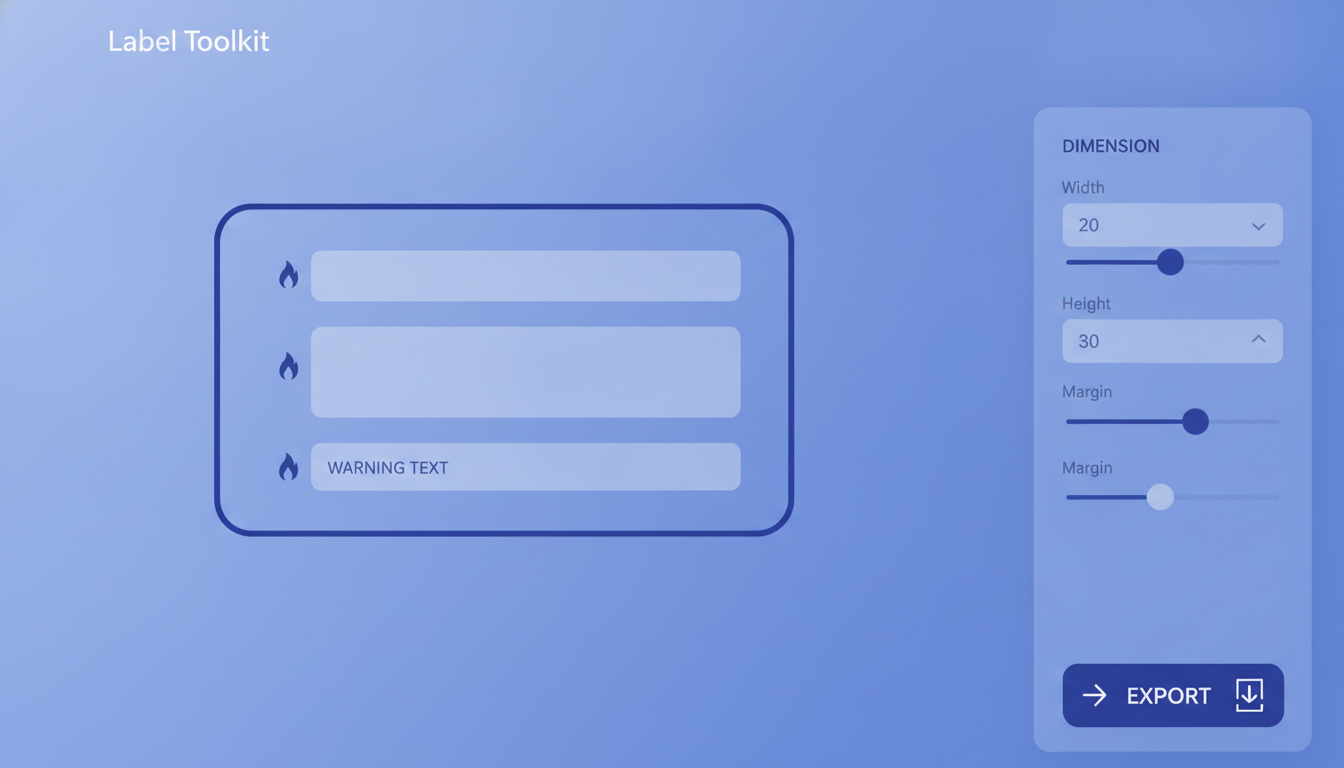
Label Toolkit's browser-based designer includes a candle warning label template that pre-loads all four ASTM F2058 statements and the flame icon placeholder. Here is the step-by-step workflow:

  1. Open the template gallery. Go to the free label templates page or navigate directly to the designer. Select the "Candle Warning" template from the compliance section.
  2. Set your label dimensions. In the canvas settings panel, enter the width and height in millimeters or inches to match your candle container. For a standard 3-inch jar candle, 76 mm x 44 mm (3 in x 1.75 in) works well on the bottom.
  3. Customize brand fields. Click each text field to replace the placeholder brand name, fragrance name, and net weight. The warning block is locked by default to prevent accidental edits to required language.
  4. Check font size. Select the warning body text and confirm it reads 6 pt or larger in the toolbar. The signal word "WARNING" should be 9 pt bold. Label Toolkit displays the rendered point size based on your canvas dimensions.
  5. Add a flame icon or logo. Upload your brand logo or the NCA flame pictogram using the image upload tool. Position it to the left of the "WARNING" heading.
  6. Preview and export. Use the vector PDF export (File > Export PDF) to generate a print-ready file with correct crop marks and bleeds. For thermal printers, export ZPL if you print on a Zebra device.
  7. Print or order. Print locally on a thermal or inkjet label printer, or upload the PDF to a label print-on-demand service.
Label Toolkit canvas showing a candle label template with warning text fields, dimension panel open, and export button visible

Choosing the Right Label Material for Candles

The label material matters as much as the text. Candle containers get warm in use, and some are stored in humid environments. Consider these options:

MaterialHeat resistanceBest forWatch out for
BOPP (biaxially oriented polypropylene)Up to about 80 C (176 F)Glass jar candles, tin candlesAdhesive can soften if label is on a very hot surface
White gloss paper with permanent adhesiveUp to about 60 C (140 F)Retail candles that stay cool externallyMoisture or condensation can cause peeling
Polyester (PET)Up to about 150 C (302 F)High-heat applications; pillar candles near flameHigher cost; requires solvent-based adhesive
Direct thermal paperUp to about 50 C (122 F)Temporary or shipping labels onlyDarkens with heat; not suitable for candle warning labels

For most jar candles with labels applied to the glass bottom or lower side wall, BOPP with a permanent acrylic adhesive is the industry standard. The label stays below the hottest zone of the glass and tolerates normal storage and retail humidity.

Where to Place the Warning Label on a Candle

Placement affects both compliance and aesthetics. ASTM F2058 allows the warning on:

  • The bottom of the container (most common for jar candles; keeps the front label clean).
  • The side of the container, below any decorative label, as long as it is visible before first use.
  • The outer packaging (box, sleeve, or cello wrap), if the warning is also present on the candle itself or if the candle is too small for a legible label.

Many artisan candle brands print a decorative front label and a separate, dedicated warning label for the bottom. This keeps brand aesthetics intact while meeting ASTM F2058 without cramming warnings onto a premium design.

Connecting to the Broader Compliance Pillar

Candle labeling sits within a wider category of physical product compliance requirements. If you produce other regulated goods, our US food label requirements guide covering FDA rules for 2026 and the GHS article linked above are the next logical reads. Together with this article, they form the compliance cluster on Label Toolkit covering the three most common product label regulations small businesses face.

For a complete overview of every compliance label type Label Toolkit supports, visit the label requirements and compliance category hub.

Frequently asked questions

Is ASTM F2058 legally required for candles sold in the US?

ASTM F2058 is a voluntary standard, not a federal regulation, but major retailers and platforms require compliance as a condition of sale. The CPSC can also pursue action under the Federal Hazardous Substances Act if a candle lacks adequate warnings and causes injury, making compliance effectively mandatory for any serious commercial operation.

What is the minimum font size for candle warning labels?

ASTM F2058 requires body warning text to be at least 6 pt (approximately 2.1 mm cap height) and the signal word "WARNING" to be at least 9 pt in bold. These minimums apply to the printed, finished label, not the design file point size.

Can I put candle warnings on the box instead of the candle itself?

Yes, outer packaging can carry the required warnings if the candle container is too small for a legible label. However, if the candle is sold without packaging at any point (for example, at a craft market), the warning must also appear on the candle or its permanent hang tag.

Do soy candles have different label requirements than paraffin candles?

No, ASTM F2058 applies to all container candles regardless of wax type. The same four warning statements, font sizes, and placement rules apply to soy, paraffin, beeswax, and coconut wax candles equally. Fragrance ingredients may trigger additional CLP or Prop 65 disclosures depending on their classification.

How do I print a candle warning label on a Zebra thermal printer?

Design your label in Label Toolkit, set the canvas to your label stock dimensions (for example, 76 mm x 44 mm for a 3-inch jar bottom label), and export ZPL. Load the file to your Zebra printer via USB, Ethernet, or the Label Toolkit ZPL export. Set your print density to match your media: 203 DPI printers output roughly 8 dots per mm, so a 6 pt character is about 14 dots tall and remains legible; 300 DPI printers give you 12 dots per mm and sharper small text.

Ready to build your candle warning label right now? Create a free Label Toolkit account and open the candle label template in under a minute, no installation required.

Related reading: Hazmat Labels Explained: DOT Classes, Sizes and When You Need Them

#candle label requirements #candle warning label #ASTM F2058 #candle labeling #product label compliance #candle maker
BH
Written by Benjamin Hayes
View profile →